
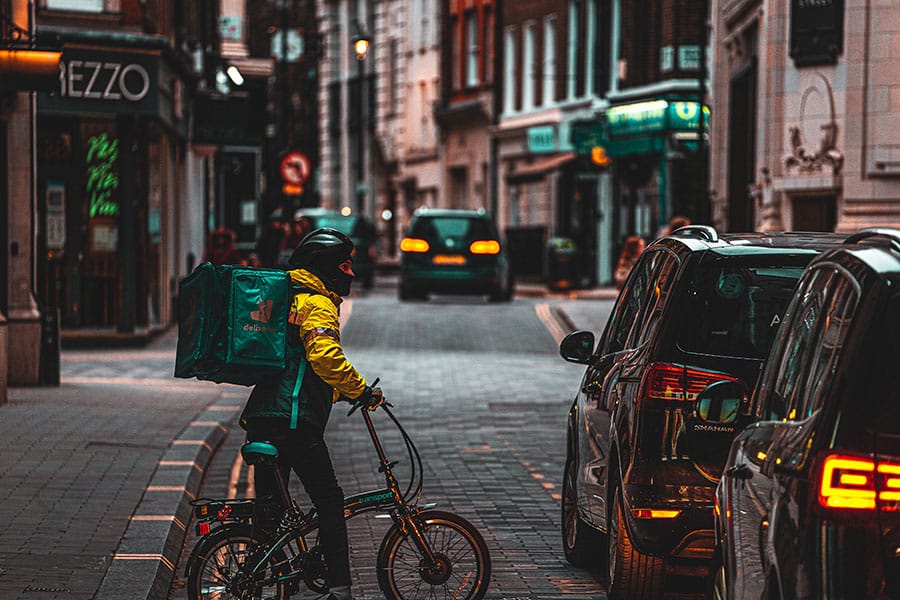
If you’re already doing Uber work (or thinking about it), Deliveroo is one of the easiest “bolt-on” apps in London: self-employed, flexible, and you can go online when it suits you. The flip side is the usual delivery game: busy peaks = decent money, quiet hours = waiting around for free.
Below is the London-focused, rider-to-rider breakdown: requirements, how to join, what you can earn, best vehicle choice, plus a mini comparison vs Uber Eats and Just Eat.
Deliveroo rider requirements in the UK
Deliveroo’s official requirements are pretty clear – you must have:
- Age 18+
- Proof of right to stay and work in the UK
- A smartphone with iOS 16 / Android 8+, NFC, and front + rear cameras (for app + verification)
- Your own vehicle: bike / cargo bike / scooter / car (plus safety equipment)
- A UK bank account for payments
- Background checks:
All new riders complete a Criminal Record Check (CRC) as part of onboarding - Extra if you’re on scooter or car:
Deliveroo states car and motorised scooter riders need SD&P + Hire & Reward insurance while working
Deliveroo also notes scooter/car riders must have vehicle liability cover + food delivery insurance as required by law
What documents you’ll need (and what delays people)
Deliveroo’s rider portal asks for standard onboarding docs, including:
- Right to work / self-employed eligibility document
- Proof of address
- NI number
- Bank details
- CRC documents for the criminal record check
- Scooter/Car: driving licence + delivery insurance evidence and sometimes vehicle/plate photos
Rider-to-rider tip: most delays are caused by blurry photos, mismatched names/addresses, or uploading the wrong document type.
How to become a Deliveroo rider
- Apply online on Deliveroo’s rider site
- Pick you city (London or other) + your vehicle type (bike/scooter/car)
- Upload documents – make sure details match exactly
- Complete your background check – run via Deliveroo’s background. This is either Sterling or FirstAdvantage.
- Onboarding (virtual or in-person depending on area)
- Get your kit sorted, but you can use your own thermal bag; Deliveroo also sells a decent kit
Deliveroo earnings – what’s realistic?
Deliveroo is typically paid per delivery (and may include boosts/incentives at certain times/areas). Your “hourly” depends on how many orders you actually complete.
The London reality:
- Peak times (lunch + dinner) are where you make your week.
- Quiet hours can drag your effective hourly down fast because waiting time isn’t paid (you’ll see this across all delivery apps, but you can combine them 😉 ).
Because rider earnings vary massively by zone, timing, and vehicle, treat any £/hour figure online as a range, not a promise.
Bike vs Scooter vs Car in London – which one actually makes sense?
Here’s the honest comparison for London streets:
Bike / Legal e-bike
Best for Zone 1–2, short runs, and beating traffic. It’s usually the cheapest option and can be fastest in congestion, but weather and long/heavy orders can wear you down.
London tip: a power bank and solid phone mount are basically essentials.
Scooter / motorbike
Best if you want more speed and range without car-level costs. You can cover more ground and work wider zones more reliably, but you’ll have insurance/running costs and may need the right licence/CBT. Deliveroo: SD&P + Hire & Reward while working.
Car or Van
Best for outer London, longer runs, and staying comfortable in bad weather. It’s dry and handles bigger loads, but in London parking + congestion can be brutal and costs (fuel/servicing/insurance) can eat profits.
Deliveroo: SD&P + Hire & Reward while working.
Simple rule:
- Mostly Zone 1–2 → Bike/e-bike
- Want the best all-rounder → Scooter
- Mostly outer zones or prioritise comfort → Car (but watch the costs)
Deliveroo vs Uber Eats vs Just Eat
You asked for a short comparison – here it is, London-style.
Deliveroo
Strengths
- Strong in busy restaurant areas and peaks
- Clear rider requirements (right to work, CRC, app specs
Cons
Per-delivery model: quiet shifts can feel dead
Uber Eats
Strengths
- Huge brand + lots of orders in many zones
- Uber sets baseline eligibility like 18+, right to work, no unspent convictions, plus insurance where required
Cons
Can be highly area-dependent; some zones are “feast or famine”
Just Eat (courier / network)
Strengths
- Often more structured onboarding feel
- Just Eat lists requirements like 18+, vehicle, smartphone, banking info, thermal bags; background checks are part of signup
Watch-outs
“Worth it” depends on whether your local zones are active and how shifts/availability are set up for your area
Rider strategy most London couriers use
If your insurance/vehicle setup allows it, multi-apping (responsibly) can smooth out quiet patches — just don’t run yourself into late deliveries and bad ratings.
Frequently Asked Questions
Do I need Hire & Reward insurance for Deliveroo?
If you’re delivering by car or motorised scooter, Deliveroo says you need SD&P + Hire & Reward while working.
Does Deliveroo do a criminal record check?
Yes – new riders complete a CRC during onboarding.
Can I use my own bag?
Yes. Deliveroo says you can use any thermal bag (as long as it meets requirements).
What phone do I need?
Deliveroo lists iOS 16 / Android 8+, NFC, and front + rear cameras.
Is Deliveroo worth it in London?
It can be — if you focus on peaks, pick the right zones, and track profit after costs (especially if you’re on car/scooter).